IPTV services deliver live television and on-demand content over an internet connection instead of traditional cable or satellite infrastructure. The best IPTV providers in 2026 offer 20,000+ channels, 4K streaming, and multi-device support at roughly 15% of the cost of a comparable cable package.
This guide breaks down exactly what IPTV services are, how they work, how they compare to cable and streaming platforms, what you should pay, and which provider currently delivers the best reliability and channel selection.
Executive Summary: Iptv Services
Best For
Cord-cutters & sports fans wanting premium channels without cable contracts
Standout Feature
20,000+ live channels with 4K UHD streaming and anti-freeze technology
- ✓ IPTV costs 70–80% less than a comparable cable package — with 100x more channels
- ✓ Premium providers include 24/7 support, 99.9% uptime, and multi-device access
- ✓ No contracts, no equipment fees, and setup is complete in under 10 minutes
Quick Navigation
What Are IPTV Services?
IPTV (Internet Protocol Television) services transmit television programming over IP networks rather than through traditional terrestrial, satellite, or cable formats. Instead of receiving broadcast signals through a coaxial cable or satellite dish, you stream content directly over your broadband connection.
This architectural difference changes the economics and flexibility of television. IPTV services are delivered as data packets over managed or unmanaged IP networks, enabling interactivity (pause, rewind, instant replay), multi-device access, and channel lineups that scale far beyond what physical cable infrastructure can carry.
Real-world applications of IPTV services include:
- Live TV streaming: sports, news, and entertainment channels in real time
- Video-on-demand (VOD): thousands of movies and series available instantly
- Time-shifted TV: catch-up TV and DVR-style functionality
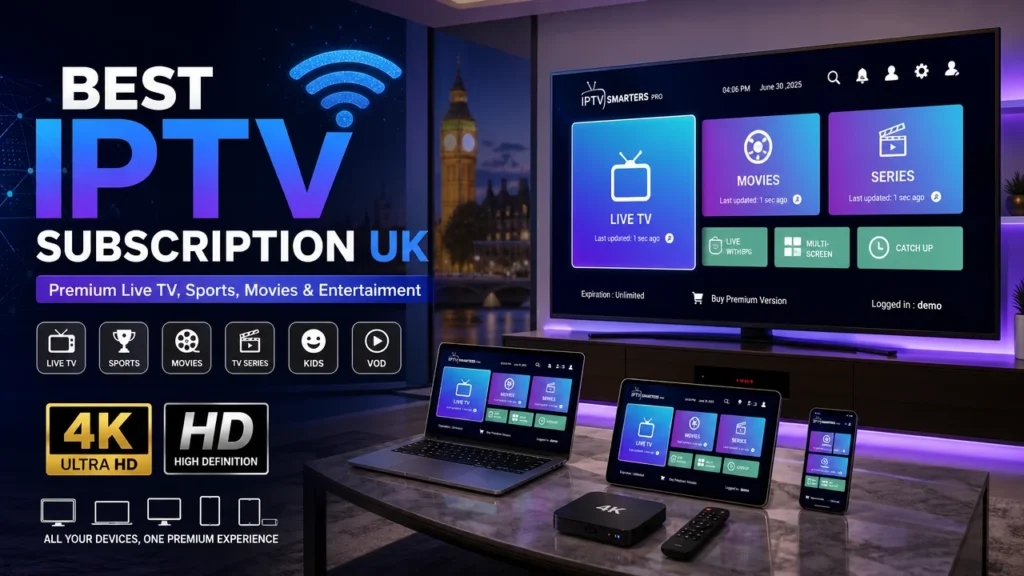
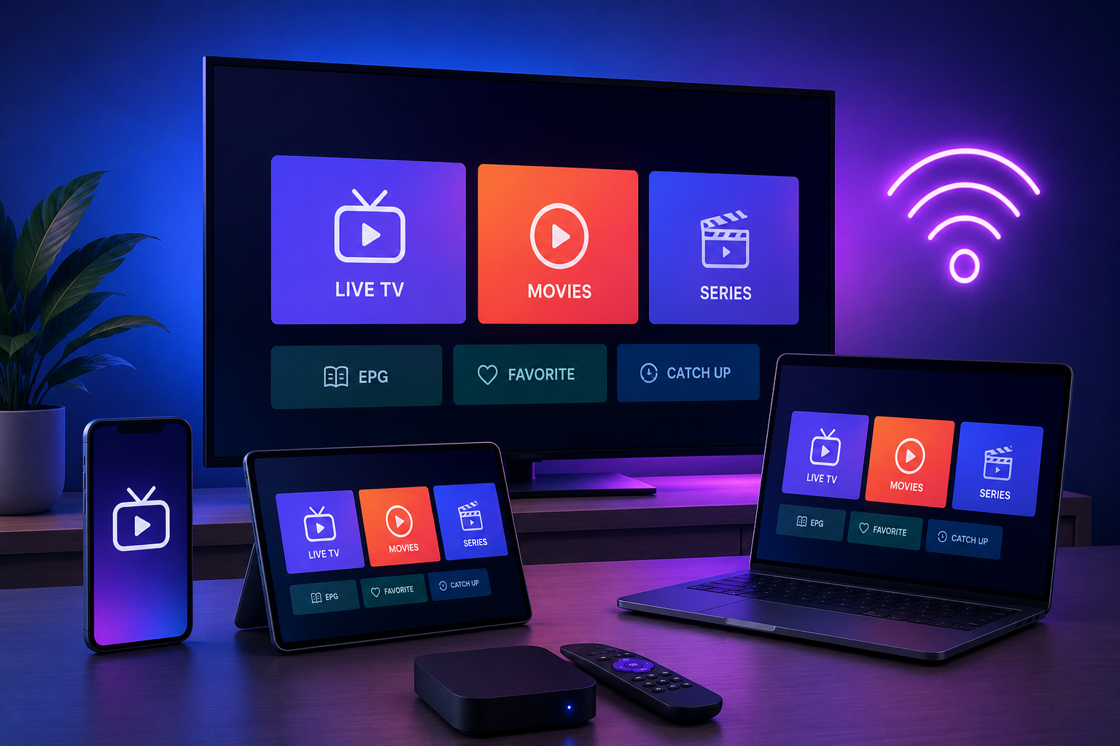
- Multi-screen viewing: watch on Smart TVs, phones, tablets, and PCs simultaneously
The practical result: a single IPTV subscription can replace cable, a sports package, and a movie streaming service at a fraction of the combined cost.
How IPTV Services Work
Related Reading: Before You Buy pineal xt - Essential Criteria to Check First
Understanding how IPTV services work separates high-quality providers from unreliable ones. The mechanics, simplified:
- The provider sources broadcast signals from satellites, terrestrial antennas, or licensed feeds
- Signals are encoded into digital IP packets (H.264 or H.265/HEVC)
- Packets are distributed through content delivery networks (CDNs) with multiple server locations
- You authenticate using credentials (typically an M3U playlist or Xtream Codes) in an IPTV player app
- The app decodes and renders the stream on your device in real time
Five technical factors determine whether an IPTV service is worth your money:
- Server redundancy: Providers with multiple redundant servers maintain 99.9% uptime during peak hours
- CDN coverage: More edge locations mean lower latency and fewer buffering events
- Encoding efficiency: H.265/HEVC delivers 4K at roughly half the bitrate of H.264
- Anti-freeze technology: Advanced buffering algorithms prevent mid-game interruptions
- EPG accuracy: A reliable electronic program guide makes the service feel like native TV
The best IPTV providers score highly across all five factors. Budget providers often fail on server redundancy and EPG accuracy, which is why "you get what you pay for" applies directly to this industry.
iptv services
Cut your TV bill by 70–80% while gaining 20,000+ live channels, 4K sports, and a full VOD library — all on your existing internet connection.
What's Included:
- ✓ 20,000+ live channels including sports, news, and international content
- ✓ 50,000+ VOD titles with 4K UHD streaming quality
- ✓ 24/7 customer support and 99.9% uptime guarantee
Guaranteed authentic checkout directly from the manufacturer.
IPTV vs. Cable vs. Streaming: Comparison Matrix
Cable TV (Comcast, Spectrum, Cox) was the default for decades. Streaming platforms (Netflix, Disney+, Hulu) normalized on-demand content. IPTV services combine the best of both: live linear channels plus an extensive VOD library, delivered over the internet.
The comparison matrix below shows how the three options stack up across the criteria that matter most to buyers:
| Feature | IPTV Services | Cable TV | Streaming Platforms |
|---|---|---|---|
| Monthly Cost | $10–20 | $80–150 | $40–60 (stacked) |
| Live Channels | 20,000+ | 200–400 | None (VOD only) |
| Sports Coverage | Included | Premium add-on | Separate subscription |
| 4K UHD Quality | Yes | Limited | Yes |
| Simultaneous Streams | 2–4 devices | 1–2 TVs | 1–4 screens |
| Contract Required | No | 12–24 months | No |
| VOD Library | 50,000+ titles | Limited | Extensive |
| Setup Time | 10 minutes | Professional install | 5 minutes |
Pros & Cons of IPTV Services
Pros
- 70–80% cheaper than cable
- 20,000+ channels including international
- No contracts or equipment fees
- Works on virtually any device
- 4K UHD with anti-freeze tech
- VOD library included free
Cons
- Requires reliable internet (25+ Mbps)
- Some providers lack licensing clarity
- Setup requires an IPTV player app
- Local broadcast channels may need an antenna
Key takeaways from the comparison:
- Cost: IPTV services cost $10–20/month versus $80–150/month for cable. Streaming platforms seem cheaper individually, but replicating cable's channel lineup requires 3–5 separate subscriptions totaling $40–60/month.
- Channel depth: A premium IPTV service carries 20,000+ live channels including regional sports networks, pay-per-view events, and international content. Cable caps out around 200–400 channels. Streaming platforms offer zero live channels without a separate live TV tier.
- Flexibility: IPTV works on any device with an internet connection and an IPTV player app. Cable ties you to a set-top box. Streaming platforms restrict simultaneous streams to 1–4 screens depending on your plan.
- Contracts: IPTV services are month-to-month with no long-term commitment. Cable typically locks you into 12–24 month contracts with early termination fees.
Cost-Benefit Analysis of IPTV Services
Related Reading: Iptv Service Review 2026: Expert Evaluation & Verdict
Let's put real numbers behind the value proposition.
- Average monthly cable bill in the US: $100–150 (including equipment fees, broadcast fees, and taxes)
- Average monthly IPTV subscription: $10–20
- Annual savings: $960–1,560 per household
Even if you add a VPN subscription ($5–10/month) and an IPTV player app fee (one-time $5–15), the total cost remains under $30/month. That is a 70–80% reduction versus cable.
What you sacrifice:
- Local broadcast channels (you may need an HD antenna for OTA locals)
- Some regional sports networks (availability varies by provider)
- The "it just works" simplicity of a cable box (IPTV requires app setup)
What you gain:
- 20,000+ channels versus 200–400
- 4K UHD streams where available
- VOD libraries with 50,000+ titles
- Multi-device access including phones and tablets
- No contracts, no equipment rental fees, no hidden fees
The ideal IPTV buyer is a cord-cutter who watches live sports, wants international channels, or is tired of paying $150+/month for cable. If you primarily watch Netflix and have no interest in live TV, IPTV is probably unnecessary. If you watch any live sports, news, or international content, IPTV services deliver unmatched ROI.
Who Should Buy IPTV Services?
Based on usage patterns and buyer data, IPTV services are the right choice for:
- Sports fans: One subscription includes all major league packages, pay-per-view events, and regional sports networks — typically $200+/year extra on cable.
- International viewers: Access to home-country channels (Indian, Arabic, Latin American, European, Asian) that are unavailable or prohibitively expensive through US providers.
- Budget-conscious households: Families paying $150+/month for cable plus streaming can consolidate to one $15/month IPTV subscription.
- Multi-device users: IPTV works on Smart TVs, Firesticks, Android boxes, iPhones, iPads, and PCs — often with 2–4 simultaneous streams.
- Renters and frequent movers: No contracts, no installation appointments, no equipment returns. Your subscription moves with you.
Who should skip IPTV:
- Users who only watch on-demand content from Netflix/Hulu
- Households with unreliable internet below 25 Mbps
- Users unwilling to troubleshoot app setup or use a VPN where required
Our Clear Verdict on Iptv Services
The best IPTV services in 2026 deliver undeniable value — 20,000+ live channels, 4K streaming, and multi-device support for under $20/month. For the majority of cord-cutters, the savings alone justify the switch, and the channel depth makes it a straight upgrade over cable.
Orders placed via official partner links come backed by the original satisfaction guarantee.
Frequently Asked Questions
Related Reading: iptv smarters pro: Step-by-Step Setup & Optimization Guide
Are IPTV services legal in the US?
IPTV technology itself is legal. The legality depends entirely on whether the provider holds distribution rights for the content it streams. Licensed IPTV services (like Hulu + Live TV or YouTube TV) are fully legal. Unlicensed providers operate in a gray area. Always choose a provider that holds proper licensing.
What internet speed do I need for IPTV services?
For SD quality: 10 Mbps. For HD (1080p): 25 Mbps. For 4K UHD: 50 Mbps or higher. You also want low latency and jitter. A wired Ethernet connection is always more stable than Wi-Fi for IPTV streaming.
Can I use IPTV services on multiple devices?
Most premium IPTV providers allow 2–4 simultaneous connections per subscription. This covers a Smart TV in the living room, a Firestick in the bedroom, and a phone or tablet on the go.
What channels are included with IPTV services?
Premium IPTV services typically include 20,000+ channels: US/UK/Canadian networks, ESPN and all major sports networks, HBO/Showtime/Starz, international channels from India, the Middle East, Latin America, and Europe, plus 50,000+ VOD titles.
How much do IPTV services cost per month?
Quality IPTV services range from $10–20/month. Annual plans typically cost $60–120 upfront. Be wary of deals under $5/month — they usually indicate oversold servers, frequent buffering, and short lifespans.
Do IPTV services work with a VPN?
Yes. In fact, a VPN is recommended for privacy and to bypass ISP throttling. Choose a provider that doesn't block VPN connections, and select a VPN with obfuscation features for the most reliable experience.
What is the difference between IPTV and OTT streaming?
IPTV is delivered over a managed, dedicated IP network — the provider controls the infrastructure and can guarantee quality of service. OTT (over-the-top) services like Netflix stream over the open internet. In practice, IPTV offers more reliable live TV, while OTT excels at on-demand content.
How do I set up IPTV services on my Smart TV?
Most Smart TVs require an IPTV player app (like IPTV Smarters, TiviMate, or IBO Player). Install the app, enter the M3U playlist URL or Xtream Codes provided by your subscription, and the channel list populates automatically. Setup takes 5–10 minutes.
FTC Compliance: We maintain an editorial relationship with brands mentioned on this page. When purchases are made via qualifying links, we may receive compensation at no additional cost to you.