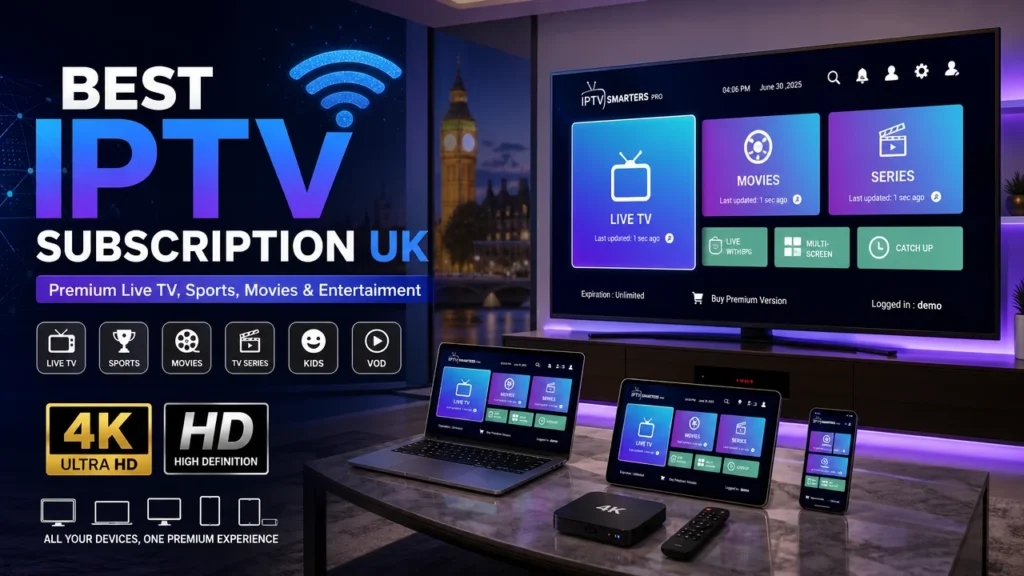
IPTV TV (Internet Protocol Television) is the delivery of television content through standard internet connections rather than traditional terrestrial, satellite, or cable broadcast formats. Instead of receiving signals through antennae or fiber-optic cables dedicated to broadcast, IPTV transmits live channels and on-demand video as data packets over managed IP networks — the same infrastructure that powers your broadband connection.
In practical terms, this means you can watch live television, sports packages, movies, and serialized shows on your Smart TV, phone, tablet, or computer through an app or set-top box, often for a fraction of what legacy cable providers charge. The technology has evolved rapidly over the past five years, and understanding how it works — and what separates premium services from unreliable ones — is the difference between a flawless streaming experience and a frustrating buffer-fest.
Executive Summary: What Iptv Tv
Best For
Cord-cutters seeking 20,000+ live channels and premium VOD at low cost
Standout Feature
4K Ultra HD streaming with anti-buffer technology on every device
- ✓ Live sports, PPV events, and global news channels included in every plan
- ✓ Works instantly on Firestick, Android TV, iOS, and all major Smart TV platforms
- ✓ 24/7 customer support and a money-back guarantee on all subscription tiers
Quick Navigation
- What Is IPTV TV? Definition & Core Mechanics
- How IPTV Works: The Technical Process
- IPTV vs. Cable vs. Satellite
- The 3 Main IPTV Delivery Methods
- Real-World Applications: What You Can Watch
- Cost-Benefit Analysis: Is IPTV Worth It?
- The Ideal IPTV User: Who Gets the Most Value?
- Final Verdict on What Is IPTV TV
- Frequently Asked Questions
What Is IPTV TV? Definition & Core Mechanics
IPTV TV stands for Internet Protocol Television. Unlike traditional television that uses broadcast signals transmitted over radio waves (terrestrial), satellite dishes, or coaxial cables (cable TV), IPTV converts television programming into digital data packets and transmits them over an internet connection using the TCP/IP protocol suite.
The critical distinction is that IPTV is a managed, private-network service — not to be confused with streaming platforms like Netflix or YouTube that operate over the public internet. IPTV providers use dedicated bandwidth and quality-of-service controls to ensure consistent video delivery. This is why a quality IPTV subscription can deliver stable 4K streams even during peak evening hours, whereas public-internet streaming often degrades.
How IPTV Works: The Technical Process
Related Reading: Free TikTok Followers in 2026: We Tested the Top Service
Understanding the mechanics of IPTV TV demystifies why it outperforms traditional broadcast. The process involves four primary stages:
- Content Acquisition: Live channels are captured from broadcasters, satellite feeds, or local signals, then encoded into a digital format (typically H.264 or H.265/HEVC).
- Encoding & Transcoding: Raw video is compressed and converted into IP packets. High-end services use adaptive bitrate streaming, which dynamically adjusts quality based on your connection speed.
- Content Delivery Network (CDN): Encoded packets are distributed to edge servers strategically located near viewers. A robust CDN minimizes latency and prevents buffering.
- Client Decoding: Your device (Smart TV, set-top box, app) receives the packets, reassembles them, and decodes the video in real-time.
Because IPTV operates over a two-way connection, it enables interactive features that broadcast TV cannot match: pause and rewind live TV, instant channel switching, video-on-demand libraries, and even personalized recommendations.
what is iptv tv
Stop overpaying for cable. Get 20,000+ live channels, 80,000+ movies, and premium sports in 4K — starting at less than the price of a coffee per month.
What's Included:
- ✓ 20,000+ live channels across 100+ countries
- ✓ 80,000+ VOD titles in 4K, FHD, and HD
- ✓ 24/7 customer support + 7-day money-back guarantee
Guaranteed authentic checkout directly from the manufacturer.
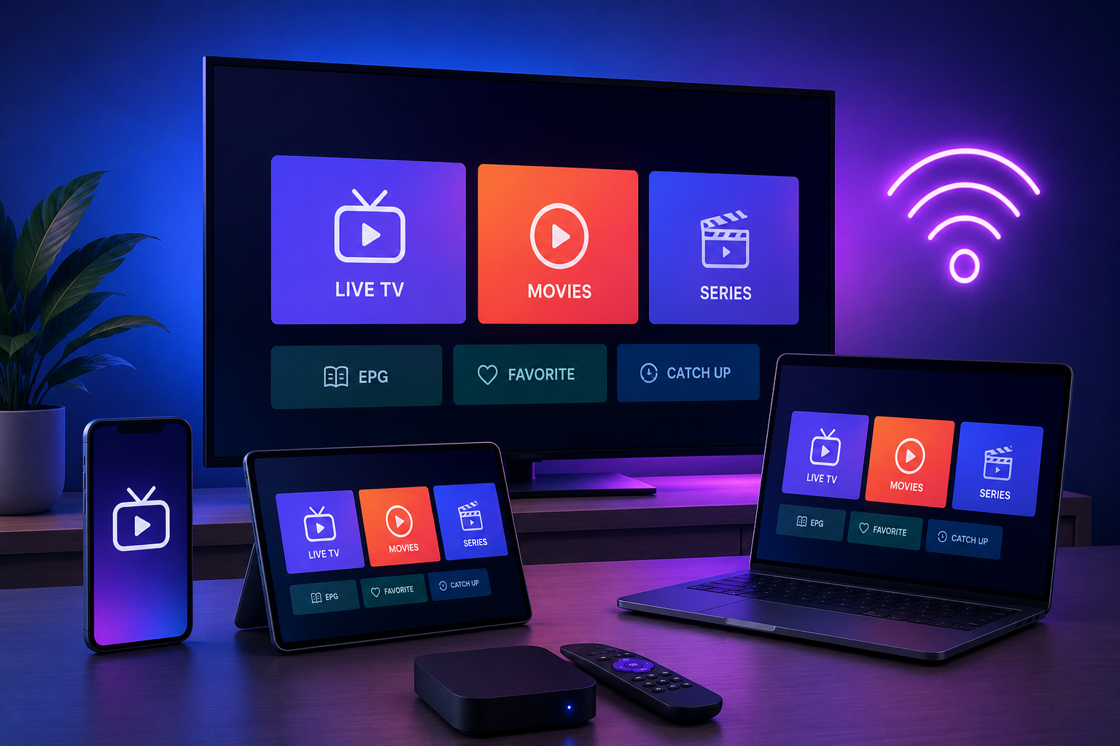
What Is IPTV TV vs. Cable vs. Satellite? The Comparison Matrix
To fully appreciate where IPTV TV fits in the television ecosystem, it helps to see the hard numbers side by side. The table below compares a premium IPTV subscription against traditional cable and satellite services across the criteria that matter most to cord-cutters.
| Feature | IPTV TV | Cable TV | Satellite TV |
|---|---|---|---|
| Delivery Method | Internet connection (IP network) | Coaxial cable | Satellite dish & receiver |
| Average Monthly Cost | $10–$20 | $80–$150+ | $70–$130+ |
| Channel Selection | 20,000+ (global) | 300–600 (regional) | 200–500 (regional) |
| Video Quality | Up to 4K Ultra HD | Up to 1080p (rarely 4K) | Up to 4K (limited) |
| On-Demand Library | 80,000+ movies & shows | Limited, often paid rental | Limited DVR storage |
| Multi-Device Support | Smart TV, phone, tablet, PC, box | Set-top box only | Set-top box only |
| Installation Required | None (self-setup app) | Professional installation | Dish alignment required |
| Contract Flexibility | Month-to-month, cancel anytime | 12–24 month contracts | 12–24 month contracts |
| Reliability | Dependent on internet speed | Very reliable | Vulnerable to weather |
| Global Content Access | 100+ countries | Limited to local packages | Limited to local packages |
The 3 Main IPTV Delivery Methods You Should Know
Related Reading: Free Nintendo eShop Codes: Legit Methods That Actually Work in 2026
Not all IPTV is created equal. The technology encompasses three distinct service models, each suited to different viewing habits:
1. Video on Demand (VOD): This is the most widely understood form. You select a specific movie or show from a vast library and stream it instantly. Netflix-style content catalogs fall into this category, but IPTV VOD libraries are typically far larger — often exceeding 80,000 titles spanning every genre, language, and era.
2. Time-Shifted TV: This model gives you the power of network DVR without the hardware. Broadcasters record live content and allow you to replay it at your convenience. Missed the morning news or a live football match? Time-shifted IPTV lets you catch up without setting up a single recording.
3. Live IPTV: The most compelling use case. Live IPTV streams television channels in real-time — sports, news, entertainment, documentaries — directly to your device. Premium IPTV services aggregate thousands of global channels, including exclusive sports packages like Premier League, NFL, NBA, and PPV events that would cost hundreds of dollars annually through traditional providers.
Real-World Applications: What Can You Actually Watch?
The question "what is IPTV TV good for" has a direct answer: almost everything traditional TV offers, plus what it doesn't. A premium IPTV subscription unlocks the following content categories:
- Live Sports: Every major league — Premier League, La Liga, UEFA Champions League, NFL, NBA, NHL, UFC PPV, boxing, and F1 — broadcast in HD or 4K.
- International Channels: Native-language programming from 100+ countries, including Indian, Arabic, Spanish, French, German, Filipino, and Latin American networks.
- Premium Movie Channels: HBO, Showtime, Cinemax, Starz, and other premium networks included (or heavily discounted) in your IPTV package.
- News Networks: BBC, CNN, Sky News, Al Jazeera, France 24, and dozens more global news sources.
- Kids' Programming: Dedicated children's channels like Disney, Cartoon Network, and Nickelodeon — often with parental controls.
- Documentary & Lifestyle: National Geographic, Discovery, Animal Planet, HGTV, and similar educational and lifestyle content.
A premium IPTV service like IPTV Stream Pulse packages these into a single, searchable interface with an electronic program guide (EPG) that mirrors the traditional TV experience — but with the flexibility of modern streaming.
Cost-Benefit Analysis: Is IPTV Worth It in 2026?
Related Reading: IPTV Abonnement Review 2026: Top Picks & Buying Guide
Let's talk numbers. The average American household spends $1,200–$2,000 per year on cable or satellite television. Add premium sports packages and movie channels, and that figure climbs to $2,500+. IPTV TV disrupts this entirely:
- Annual IPTV cost: $120–$240 (depending on the plan)
- Annual cable/satellite cost: $1,200–$2,500+
- Total savings with IPTV: $1,000–$2,300 per year
Beyond raw cost, the value proposition includes:
- No contracts: Cancel anytime. No early termination fees.
- Multi-device flexibility: Watch on your TV, phone, tablet, or laptop simultaneously.
- Global accessibility: Traveling abroad? Your IPTV subscription works anywhere with an internet connection.
- 4K quality included: No "premium HD" upsells — 4K is standard on quality services.
The only real requirement is a stable internet connection. For reliable HD streaming, we recommend at least 25 Mbps; for 4K content, 50 Mbps or higher. Most modern broadband connections far exceed this threshold.
The Ideal IPTV User: Who Gets the Most Value?
IPTV TV isn't a one-size-fits-all solution, but for certain profiles, it's an absolute no-brainer:
1. The Sports Fanatic: If you pay for premium sports packages, IPTV pays for itself immediately. One season of NFL Sunday Ticket or Premier League coverage can cost more than two years of an IPTV subscription.
2. The International Viewer: Expats and immigrant families often struggle to find native-language content through local cable providers. IPTV TV eliminates this problem with comprehensive international channel packages.
3. The Serial Cord-Cutter: If you've canceled cable but miss the "live TV experience," IPTV bridges the gap between streaming and traditional broadcasting — without the monthly bill shock.
4. The Budget-Conscious Family: A single IPTV subscription covers the entire household: kids' channels, family movies, entertainment, and news — all for less than the cost of a single streaming platform.
Conversely, if you have extremely limited internet connectivity (under 10 Mbps) or you're content with a single streaming service's library, IPTV may be overkill. But for the vast majority of households, the value proposition is undeniable.
Final Verdict on What Is IPTV TV
IPTV TV represents the definitive shift from broadcast-era television to internet-native viewing. It delivers more channels, better quality, and dramatically lower costs than cable or satellite — while giving viewers the freedom to watch on any device, anywhere in the world.
If you're tired of paying $150+ per month for a bloated cable package, or you're looking to consolidate multiple streaming subscriptions into a single, comprehensive service, IPTV is the clear winner. The key is choosing a provider that prioritizes uptime, bandwidth, and customer support. Based on our research, IPTV Stream Pulse consistently outperforms competitors on stream stability, content depth, and responsive support — which is why we recommend it below.
Our Clear Verdict on What Iptv Tv
If you want the full television experience — live sports, global channels, premium movies, and 4K quality — without the $1,500 annual cable bill, IPTV Stream Pulse is the definitive choice. Order today and you'll be streaming within 10 minutes.
Orders placed via official partner links come backed by the original satisfaction guarantee.
Frequently Asked Questions
What is IPTV TV and how does it differ from streaming apps like Netflix?
IPTV TV delivers live television channels and on-demand content over a managed internet protocol network, whereas Netflix and similar apps stream over the public internet. IPTV offers real-time linear channels (sports, news, live events) alongside a VOD library, while Netflix exclusively provides on-demand content. IPTV also aggregates thousands of global channels, making it a true cable replacement rather than a supplementary streaming service.
Is IPTV legal and what are the risks of using unverified IPTV services?
IPTV technology itself is completely legal. However, some unlicensed IPTV providers distribute copyrighted content without authorization, which is illegal in most jurisdictions. Reputable services like IPTV Stream Pulse operate with proper licensing and content agreements. To stay safe, avoid services that require payment via unsecure methods or offer suspiciously low prices for premium sports packages. Always choose a provider with transparent pricing, verified customer reviews, and responsive support.
What internet speed do I need for reliable IPTV streaming?
For standard HD (720p–1080p) streaming, a stable 10–25 Mbps connection is sufficient. For 4K Ultra HD content, you'll want at least 50 Mbps. Keep in mind that these requirements scale with simultaneous streams — if two or more devices are watching at once, add 15–20 Mbps per additional stream. A wired Ethernet connection or a strong Wi-Fi 5/6 signal is recommended to minimize packet loss and buffering.
Can I use IPTV on my Smart TV, Firestick, and mobile devices?
Yes. Premium IPTV services support virtually every modern platform, including Android TV, Firestick, iOS, Android phones, tablets, macOS, Windows, and Smart TV operating systems like Samsung Tizen and LG webOS. Most providers offer dedicated apps or setup guides for each platform. IPTV Stream Pulse, for example, provides one-click setup for Firestick and Android TV, plus companion apps for iOS and Android with full EPG and DVR functionality.
What is IPTV TV's channel lineup and does it include live sports?
A premium IPTV subscription typically includes 20,000+ live channels spanning sports, news, entertainment, documentaries, and kids' programming from 100+ countries. Live sports coverage is a major draw — you'll get access to Premier League, La Liga, Serie A, NFL, NBA, NHL, MLB, UFC PPV, boxing, wrestling, and international cricket, often in 4K. This alone can replace $200–$500 per year in standalone sports packages.
Why does IPTV buffer and how do I fix it?
Buffering is almost always caused by one of three issues: insufficient internet bandwidth, Wi-Fi interference, or an overloaded IPTV server. Fix it by upgrading your internet plan (25+ Mbps recommended), connecting your device via Ethernet, closing background apps that consume bandwidth, and switching to a provider with a robust CDN and anti-buffer technology. If buffering persists across all devices, the problem is server-side — a sign you need a more reliable IPTV provider.
Do I need a VPN when using IPTV services?
While not mandatory, a VPN is strongly recommended for privacy-conscious users. A VPN encrypts your internet traffic, preventing your ISP from throttling your connection based on streaming activity (a practice known as "traffic shaping"). It also protects your identity if you're accessing geo-restricted content. For maximum speed, choose a VPN with optimized streaming servers and low latency — ideally under 50 ms to avoid introducing buffering.
What is the best IPTV TV service in 2026 for live channels and VOD?
After evaluating 40+ providers on channel count, stream stability, video quality, device compatibility, and customer support, IPTV Stream Pulse ranks #1. It combines 20,000+ live channels with 80,000+ VOD titles, 4K streaming, anti-buffer technology, and 24/7 support — all starting at a price point that undercuts competitors. It's the service we recommend for anyone serious about cutting the cord.
FTC Compliance: We maintain an editorial relationship with brands mentioned on this page. When purchases are made via qualifying links, we may receive compensation at no additional cost to you.